ISO/IEC 21964 · former DIN 66399
DIN 66399
DIN is Deutsches Institut für Normung, in English is the German Institute for Standardisation. is a German national organization for standardization. DIN is the German ISO member body. There are around thirty thousand DIN standards, covering nearly every field of technology.
following the ISO 21964 norm is essential for preventing data breaches.
ISO/IEC 21964 (former DIN 66399)
DIN 66399 (former DIN 32757)
Material Categories
The standard uses six material classifications to indicate the type of data carrier. These are always used in combination with a security level, e.g. P-3 or H-6.
Paper and printed materials
e.g. documents, books
Film-based materials
e.g. microfilm, microfiche
Optical media
e.g. CDs, DVDs, Blu-ray
Magnetic tapes
e.g. cassettes, ID badges
Hard drives with magnetic storage
Electronic storage devices
e.g. USB sticks, memory cards
Protection Classes
Protection Class 1 – Normal Protection
This class applies to internal or general data, which is often accessible to large groups within an organisation.
Example data: Internal memos, general administrative records
Impact of breach: Low; may cause limited damage to the organisation
Personal data: Still requires protection to prevent risks to individuals’ privacy or financial well-being
include Security levels:
Level 1: General documents. Low security; for non-sensitive material.
Level 2: Internal documents. Basic protection for internal use.
Level 3: Sensitive or confidential data. Includes personal data and other private information.
Protection Class 2 – High Protection
This class covers confidential data accessed by a smaller group of authorised individuals.
Example data: HR files, customer data, contracts
Impact of breach: Moderate to high; unauthorised disclosure could violate laws or contracts and cause significant harm to the organisation
Personal data: Must meet stricter protection standards due to potential financial or social impact
include Security levels:
Level 4: Particularly sensitive or confidential data. Stricter shredding requirements.
Level 5: Secret data. High-level destruction needed.
Protection Class 3 – Very High Protection
This class is for highly sensitive or secret data, limited to only a few authorised individuals.
Example data: Government documents, classified business plans, medical records
Impact of breach: Severe; could lead to legal violations, safety risks, or threats to individual freedoms
Personal data: Requires maximum protection due to potential impact on health, safety, or personal freedom
include Security levels:
Level 6: Highly secret data. For sensitive operations or protected sectors.
Level 7: Top secret data. Maximum security; smallest possible particle size.
DIN is Deutsches Institut für Normung, in English is the German Institute for Standardisation.
is a German national organization for standardization.
DIN is the German ISO member body.
There are around thirty thousand DIN standards, covering nearly every field of technology.
ISO/IEC 21964 (former DIN 66399) ; DIN 66399 (former DIN 32757)
following the ISO 21964 norm is essential for preventing data breaches.
Material Categories:
The standard uses six material classifications to indicate the type of data carrier.
These are always used in combination with a security level, e.g. P-3 or H-6.
P – Paper and printed materials (e.g. documents, books)
F – Film-based materials (e.g. microfilm, microfiche)
O – Optical media (e.g. CDs, DVDs, Blu-ray)
T – Magnetic tapes (e.g. cassettes, ID badges)
H – Hard drives with magnetic storage
E – Electronic storage devices (e.g. USB sticks, memory cards)
Protection Class 1 – Normal Protection
This class applies to internal or general data, which is often accessible to large groups within an organisation.
Example data: Internal memos, general administrative records
Impact of breach: Low; may cause limited damage to the organisation
Personal data: Still requires protection to prevent risks to individuals’ privacy or financial well-being
include Security levels:
Level 1: General documents. Low security; for non-sensitive material.
Level 2: Internal documents. Basic protection for internal use.
Level 3: Sensitive or confidential data. Includes personal data and other private information.
Protection Class 2 – High Protection
This class covers confidential data accessed by a smaller group of authorised individuals.
Example data: HR files, customer data, contracts
Impact of breach: Moderate to high; unauthorised disclosure could violate laws or contracts and cause significant harm to the organisation
Personal data: Must meet stricter protection standards due to potential financial or social impact
include Security levels:
Level 4: Particularly sensitive or confidential data. Stricter shredding requirements.
Level 5: Secret data. High-level destruction needed.
Protection Class 3 – Very High Protection
This class is for highly sensitive or secret data, limited to only a few authorised individuals.
Example data: Government documents, classified business plans, medical records
Impact of breach: Severe; could lead to legal violations, safety risks, or threats to individual freedoms
Personal data: Requires maximum protection due to potential impact on health, safety, or personal freedom
include Security levels:
Level 6: Highly secret data. For sensitive operations or protected sectors.
Level 7: Top secret data. Maximum security; smallest possible particle size.
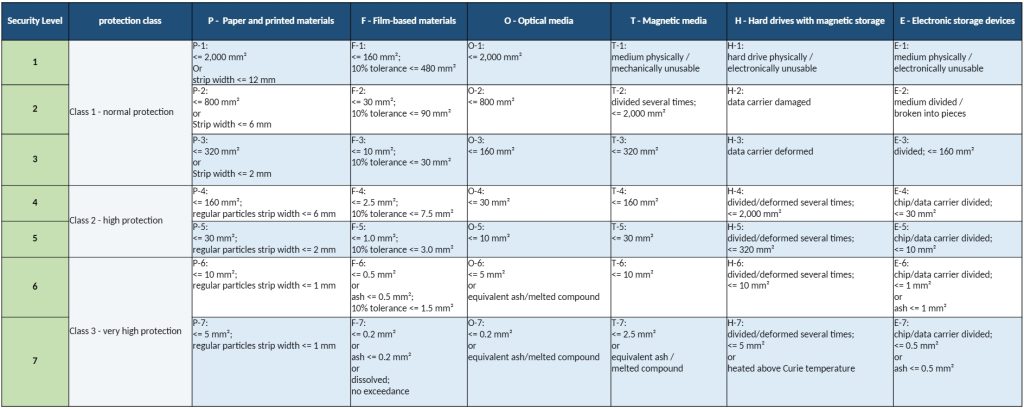
The official DIN 66399 / ISO/IEC 21964 standards are copyrighted; this workbook is a public-source operational summary, not a certified copy of the standard.
Protection class to security level mapping is a guide.